

You want clean upstairs windows without climbing a ladder. You have two routes: buy a pole and do it yourself, or book someone to do it for you.
This is a straight cost comparison of a water fed pole kit vs hiring a window cleaner. It uses real kit prices and a simple sum you can run with your own quotes.
What you’re really comparing
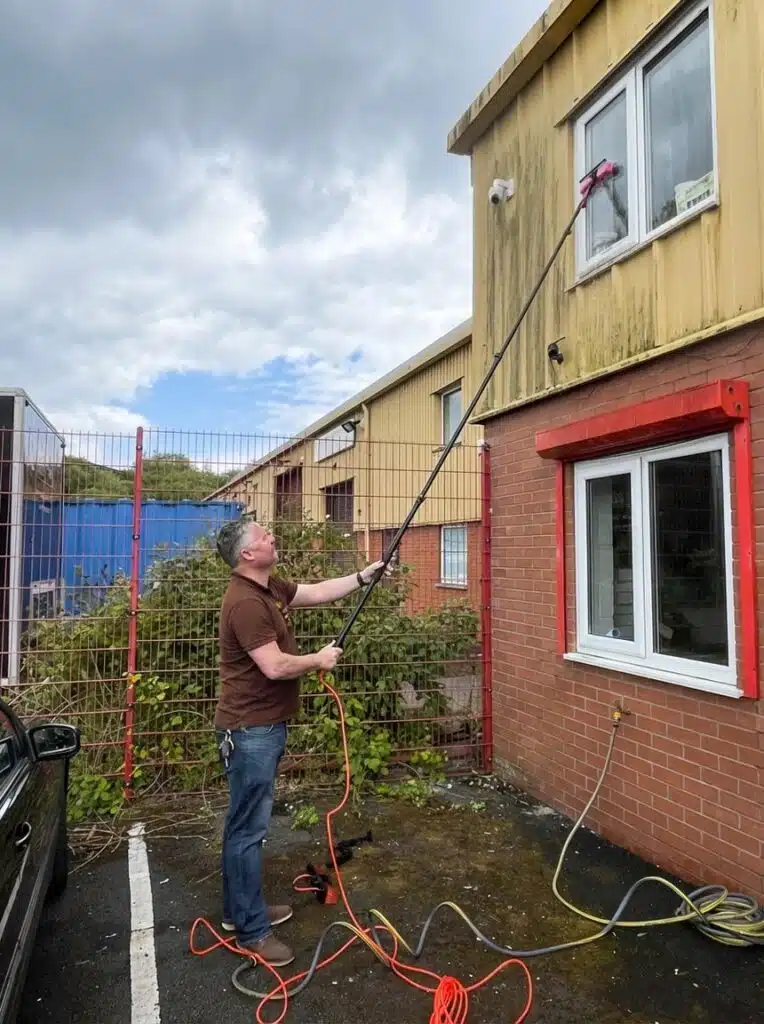
A water fed pole is an extendable pole you use from the ground. You attach a brush or squeegee at the top, connect a hose, and clean the glass without a ladder.
A hired cleaner does the same job for you. They bring their own kit, turn up on the day and do the work. You pay each time.
So this isn’t kit against kit. It’s doing it yourself against a booked service.
| Water fed pole kit | Hired window cleaner | |
|---|---|---|
| Upfront cost | One-off purchase, from around £59.95 | None |
| Recurring cost | Water, plus your own time | A fee every visit |
| Your time | Set-up and cleaning each round | Booking, and sometimes being home |
| Reach | 3.6m, 4.6m or 7m, depending on the pole | Depends on the cleaner’s equipment, so ask |
The table shows the trade-off. A kit costs more on day one and almost nothing after that. A cleaner costs nothing on day one and the bill keeps coming back.
What a water fed pole kit costs up front
The price of a kit depends mostly on reach, then on any extras you add. All prices here are approximate and may change, so check each product page before you buy. For a deeper breakdown, see what a water fed pole kit costs in the UK.
Pole reach: 3.6m, 4.6m and 7m
Three poles cover most homes. Pick by your highest window, not by price alone.
- 3.6m Water Fed Cleaning Pole, 4-in-1 Kit (Best Value), around £59.95. This is the one for everyday vehicle and light window work. Take the 3.6m water fed cleaning pole if your jobs are mostly ground-floor glass, cars and vans.
- 4.6m Water Fed Cleaning Pole, 4-in-1 Kit (Best Value), around £64.95. This is the first-floor pole. Its listing says it suits first-floor windows as well as caravans, motorhomes and vans.
- 7m Water Fed Cleaning Pole, 4-in-1 High Reach System (Professional), around £89.95. This is for multi-storey windows and tall vehicles. It collapses to 150 cm, so it fits in a van or garage.
The gap between the cheapest and dearest pole is only around £30. That means buying too short a pole is the expensive mistake, because you end up paying twice.
If your windows are upstairs, a kit for two-storey houses is the page to read next. Not sure of the length? Here’s how to pick the right pole length.
Attachments and fittings that add to the bill
Attachments are optional. Check what your chosen kit already includes before you add any.
- Push Fit Water Connector, Quick & Durable Hose Fitting Cheaper Than Amazon, around £8.95. It’s designed for standard UK hoses and water supplies.
- Cobweb Cleaner Attachment, 1 High-Reach Brush Cheaper Than Amazon, around £9.99. It’s for high corners and outdoor overhangs.
- Squeegee Attachment, 2-in-1 Streak-Free Window Cleaning Tool (Best Value), around £11.99. It removes excess water quickly for a streak-free finish.
- Gutter Cleaner Attachment, High-Reach Water Jet Tool, around £9.99. It’s for blocked gutters.
Buy all four on top of a pole and you’d add at most around £41. Most households will want one or two of them, and the accessories most kits need are worth checking before you order.
What hiring a window cleaner costs in the UK
A cleaner’s price comes down to a handful of things, and you control some of them. The main drivers are:
- how many windows you have
- whether any are upstairs and need extra access
- how often you book
- extras such as gutters or a conservatory
Regular rounds usually work out cheaper per visit than a one-off, because the cleaner already has you on their route. Ask about that when you get a quote.
Do you need to be home? For an exterior clean, often not. It depends on access: if the cleaner can reach every window through an open side gate or from the front, you can agree a time window and a payment method and leave them to it. If they need to come through the house, or you want interiors done, you’ll need to be in.
Getting quotes you can compare
Quotes often differ on scope. Upper-storey windows, conservatories and gutters may be priced separately, so compare like for like.
Here’s how to do it properly:
- Write one list of every window. Mark which are upstairs, and note the conservatory, skylights and any extras.
- Send that same list to two or three cleaners.
- Ask for each price in writing, with extras itemised.
- Ask how often they’d visit and whether a regular round changes the price.
Get the list right and the three quotes become directly comparable. Skip it and you’re comparing a ground-floor-only price with a whole-house price.
Is a water fed pole cheaper than a window cleaner over a year?
Yes, but only if you would otherwise book enough cleans to cover the kit’s price. A kit is a one-off cost, while a cleaner is a recurring one. Water and your own time count as running costs for the kit, so don’t leave them out of the sum, and a kit you rarely use is no bargain at any price.
Window cleaner annual cost in the UK: quote times visits
Work out the yearly hire total from your written quotes:
Annual hire cost = quote per visit × visits per year + extras
Extras are the things priced separately, such as gutters or a conservatory. Use your own quotes here, because the figure depends entirely on your windows and your area.
DIY window cleaning kit payback: cleans to break even
Payback tells you how many professional cleans the kit replaces before it has paid for itself:
Payback = kit price ÷ one professional clean, rounded up to whole cleans
Take the 4.6m kit at around £64.95. Divide that by one written quote for a clean. If the answer comes out at 2.1, you need three cleans to break even, because you round up.
If one professional clean already costs more than the kit, a single visit covers it. You’ve paid back on the first clean you don’t book.
The kit’s cost is also shared. The same pole can clear gutters, cobwebs and vehicles, so the window sum alone understates what you get for the money.
Now count how many cleans you’d actually book in a year. If that number is higher than your payback figure, the kit wins in year one. If it’s lower, it takes longer.
Time, safety and the finish you get
You’ll spend some time on each round. Connecting the hose, extending the pole and working along the windows takes longer than you’d think the first time, and quicker once you know your house. A hired cleaner costs you no cleaning time at all.
Safety is where the pole earns its keep. You stay on the ground, so there’s no ladder to wobble and nothing to fall from. That matters most for upstairs glass.
Finish takes a little practice. The squeegee removes excess water quickly, but you’ll want a few windows to find the angle and speed that leaves no streaks. Our squeegee attachment guide covers the technique.
One warning, plainly: keep the pole well clear of overhead power lines. Look up before you extend it, and don’t use it anywhere near cables.
If you hire instead, ask the cleaner whether they carry public liability insurance before you book. It’s a short question, and a reasonable one.
Where hiring a window cleaner still makes sense
A kit isn’t for everyone. It doesn’t suit every building, and it doesn’t clean the inside of your windows. If any of the cases below sound like yours, hiring is the better buy.
Tall buildings, flats and fiddly work
- Windows beyond the pole’s reach. The longest pole here extends to 7m. If your highest glass sits above that, book a professional.
- Flats and managed blocks. Access is often controlled, and you may not be allowed to work on shared walls or communal areas.
- No convenient outside tap. A water fed pole needs a hose supply. No tap, no easy clean.
- Interiors and fiddly frames. The pole is for outside windows. Water dripping indoors is a problem, and intricate frames are easier by hand.
Unsure whether you’re above the limit? Test your highest window against the 7m pole for multi-storey windows before you decide to hire. Its listing says it’s ideal for multi-storey windows and tall vehicles.
DIY window cleaning vs professional: which to pick
Run three checks. They take about ten minutes.
- Match your highest window to the pole’s reach. If a pole covers it, the kit is possible. If none does, hire.
- Count the cleans you’d book in a year. Use your written quotes and your honest preferred frequency.
- Run the payback sum. Divide the kit’s price by one professional clean and round up. If your yearly cleans beat that number, buy the kit.
If you pass all three, go to the product page for the pole that matches your highest window. For first-floor windows, that’s the 4.6m water fed cleaning pole. For taller or lower jobs, use the 3.6m or 7m listing instead. Check the live price and delivery details on the page before you order.
Frequently asked questions
What is water-fed pole window cleaning?
It’s cleaning windows from the ground with an extendable pole connected to a hose. A brush or squeegee sits at the top, so you reach upstairs glass without a ladder. It’s designed for outside windows, not interiors.
Do I need to stay home while someone cleans my exterior windows?
Not always. If the cleaner can reach every window from outside, through an open gate or from the front, you can agree a time and payment in advance and go out. You need to be home if they must come through the house or if interiors are included.
Is a water fed pole worth it if I only clean windows once or twice a year?
It can be, but run the payback sum first. Divide the kit’s price by one written quote and round up. If that number is more than the cleans you’d book in a year, it will take longer than a year to pay back.
Can the same pole clean gutters and vehicles as well as windows?
Yes. The listings describe the poles for window cleaning, gutter clearing and vehicles, and the 7m pole is also listed for solar panels. Gutter and cobweb jobs use optional attachments. That shared use spreads the kit’s cost beyond windows alone.
Paul Hayles
A little advice. The right pole.
Find a kit that suits your home, or ask Paul for help with your next clean.