

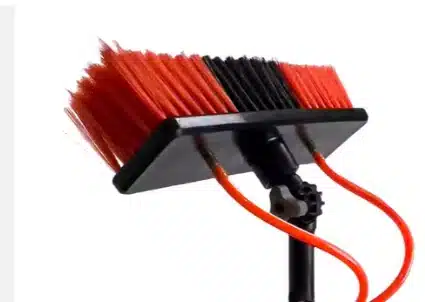
Most buyers spend time picking the right pole length and material, then grab the first brush head they see and call it done. That’s where the problems start. Water fed pole accessories uk suppliers know this better than most, it’s the brush, jets, connectors, and adapters that determine whether your setup delivers spot-free glass or a frustrating afternoon of streaks and leaks. Get the accessories right and the pole almost looks after itself. Get them wrong and even a premium carbon fibre pole feels like a waste of money.
For full system context before diving into accessories, the complete water fed pole system guide covers how everything fits together.
Why the Right Water Fed Pole Accessories Make All the Difference
The pole is just the delivery mechanism. It carries water and positions your brush. Everything that actually touches the glass, or controls the flow of water to it, is an accessory.
A blocked jet leaves mineral deposits on windows even when you’re running purified water. A mismatched connector bleeds pressure at the join. A brush with the wrong bristle type scratches surfaces or simply doesn’t agitate dirt effectively. None of those problems are fixed by a better pole.
The good news: most accessories are inexpensive, quick to swap, and make an immediate difference. Knowing what each one does, and which to prioritise, saves you money and gets you cleaning properly from day one.
Water Fed Pole Brush Heads: Which Type Do You Actually Need?
Brush heads vary in shape, size, and bristle material. Choosing the wrong one for your task is one of the most common mistakes, and it’s easily avoided.
Trim Brushes vs. Fan Brushes: Pros and Cons
Trim brushes (also called pencil brushes) have a narrow profile. They’re built for precise work, getting into corners, cleaning between frame sections, and reaching narrow strips of glass that a wider brush would skip over. Reach for one when detail matters more than speed.
Fan brushes are wider and cover more glass per pass. They suit standard residential windows where you want to move efficiently from pane to pane. Most window cleaners starting out on a telescopic window cleaning pole with brush will begin with a fan brush.
Strip brushes sit somewhere in between, wide but with a lower-profile head that works well on large flat panes, conservatory roofs, and commercial glazing.
For most homeowners: a fan brush covers 90% of jobs. For professionals: carry both a fan and a trim brush.
Choosing Bristle Material for Windows, Solar Panels, and Vehicles
Nylon bristles are durable, affordable, and effective on standard glass. They’re the default choice for residential window cleaning and hold up well to daily use.
Boar’s hair bristles are softer. They’re the traditional choice for windows where you want gentle agitation without risk of scratching, especially useful on older or treated glass.
Hybrid bristles combine a boar’s hair outer ring with nylon at the centre. You get softness on the perimeter with the scrubbing power of nylon where dirt tends to sit. Many professional cleaners rate hybrid heads as the best all-rounder.
For solar panels, bristle choice matters most. Overly stiff nylon can micro-scratch coated panel glass, reducing light transmission over time. Soft-bristle or boar’s hair brush heads are the standard recommendation in the UK solar cleaning trade. The solar panel cleaning pole kit guide goes into more detail on that specific use case.
For vehicle bodywork, go soft, always. Hard bristles on paintwork cause swirl marks. A soft hybrid or dedicated vehicle brush is the right tool; the water fed pole car cleaning guide covers the detail.
Hose Connectors and Pole Hose Connectors: Getting a Leak-Free Fit
Pole hose connectors are small but critical. A poor connection means pressure drop at the brush, inconsistent flow, and water leaking at the join rather than reaching the jets.
The hose runs up the pole (either internally or externally) and connects at multiple points, typically at the base of the pole where it meets your supply hose, and at the top where it feeds into the brush head. Both connections need to be the right fit.
Common Connector Standards Used in the UK
The UK water fed pole market uses a handful of dominant fitting standards. The most widely used is the ¼-inch push-fit (John Guest-style) connector, which is common on most mid-range and professional pole systems. You push the pipe in, it clicks, and holds under pressure without clips or tools.
Hozelock-compatible fittings appear on some consumer-grade setups and garden hose integrations, useful if you’re running a supply from a domestic tap rather than a dedicated pump system.
BSP (British Standard Pipe) threaded fittings are less common at the pole end but appear in pump and filter system plumbing.
Before buying a replacement or additional hose, check the internal diameter of your existing hose (typically 6mm or 8mm for pole runs) and the fitting type at each end. Mismatching either dimension is the most common source of connector leaks. If in doubt, bring the existing connector to compare, or contact the supplier directly, a two-minute conversation saves a wasted delivery.
Water Fed Pole Jets and Rinse Bar Attachments
Jets are what deliver water to the glass. They sit inside or below the brush head, and their condition directly affects cleaning quality. Worn or partially blocked jets are the most common cause of streaking after purified water rinsing, not the water quality itself.
Experienced window cleaners consistently trace post-rinse streaking back to jets. A replacement jet costs a few pounds and fixes what looks like a more expensive problem. Keep a spare set in your kit bag.
Single Jets vs. Rinse Bar Attachments: When to Use Each
Single fan jets direct a focused stream of water at the glass. They’re precise, easy to position, and suit most residential window cleaning tasks. A self-employed window cleaner switching from squeegee to water fed pole will typically start with single jets and find them sufficient for standard house work.
Rinse bar attachments span the full width of the brush head and deliver water evenly across the whole working edge. They’re faster on large flat panes, commercial glazing, patio doors, conservatory panels, because they cover more surface in a single pass without repositioning. The trade-off is slightly higher water consumption and less precision in corners.
The common trade pattern: start with single jets, add a rinse bar once you’re regularly cleaning larger commercial glass. The two setups complement each other rather than compete.
Pole Gooseneck Adapters and Other Useful Add-Ons
A pole gooseneck adapter (also called an angled neck) fits between the brush head and the top of the pole. It bends the brush forward at an angle, typically around 30–45 degrees, so you can work across fascias, window cills, and recessed frames without repositioning your feet or leaning the pole at an awkward angle.
On British residential property, fascias and cills are standard. So are inset window frames where a straight brush simply can’t make consistent contact. Gooseneck adapters are among the most frequently reordered accessories for professional window cleaners in the UK, not a luxury, but a practical necessity for most real-world cleaning routes.
Flow-control valves are another cost-effective add-on. Fitted at the pole or brush head, they let you throttle water flow without returning to the pump. Useful when you’re switching between windows requiring heavy agitation and a light rinse.
T-bar adapters allow you to fit a traditional unger-style flat mop or squeegee pad to a water fed pole system. Less common, but handy for cleaners who run mixed setups or need to clean interior glass with the same pole.
None of these add-ons are expensive, but each one solves a specific frustration that adds up over a working day.
Professional vs. DIY Cleaning Setups: Which Accessories Do You Need?
You don’t need every accessory on day one. What you need depends on what you’re cleaning and how often.
Homeowner starter kit:
- 1 fan brush head (hybrid bristle)
- Single jets (fitted or replacement set)
- ¼-inch push-fit connector to match your hose
- Gooseneck adapter if your windows have deep cills or recessed frames
That covers the vast majority of domestic window cleaning tasks and lets you clean upstairs windows safely from the ground. If you’re new to the setup, the cleaning upstairs windows without a ladder guide walks through the workflow.
Tradesperson kit:
- Fan brush (hybrid) + trim brush for detail work
- Rinse bar attachment for commercial glazing
- Spare jets (always carry backups)
- Gooseneck adapter
- Flow-control valve
- Spare connectors in the sizes your system uses
- Soft-bristle or boar’s hair brush if you take on solar panel or vehicle work
The difference between the two lists isn’t complexity, it’s volume and variety. A professional cleaner needs reliability and speed across multiple job types. The water fed pole vs traditional window cleaning breakdown makes the case for upgrading if you’re still running a squeegee setup.
At Paul’s Poles, we stock brush heads, jets, hoses, and adapters alongside our pole systems, so you can spec a complete setup in one order without hunting across multiple suppliers. No marketplace guesswork, no mismatched fittings arriving separately. If you know what you need, browse the accessory range directly. If you’re not sure, get in touch and we’ll point you at the right parts for your setup.
A little advice. The right pole.
Find a kit that suits your home, or ask Paul for help with your next clean.
